Operating a centrifugal pump against a closed discharge valve, or at severely reduced flow, can cause overheating and damage. Startup, shutdown and low-load periods are common times for this risk to appear.
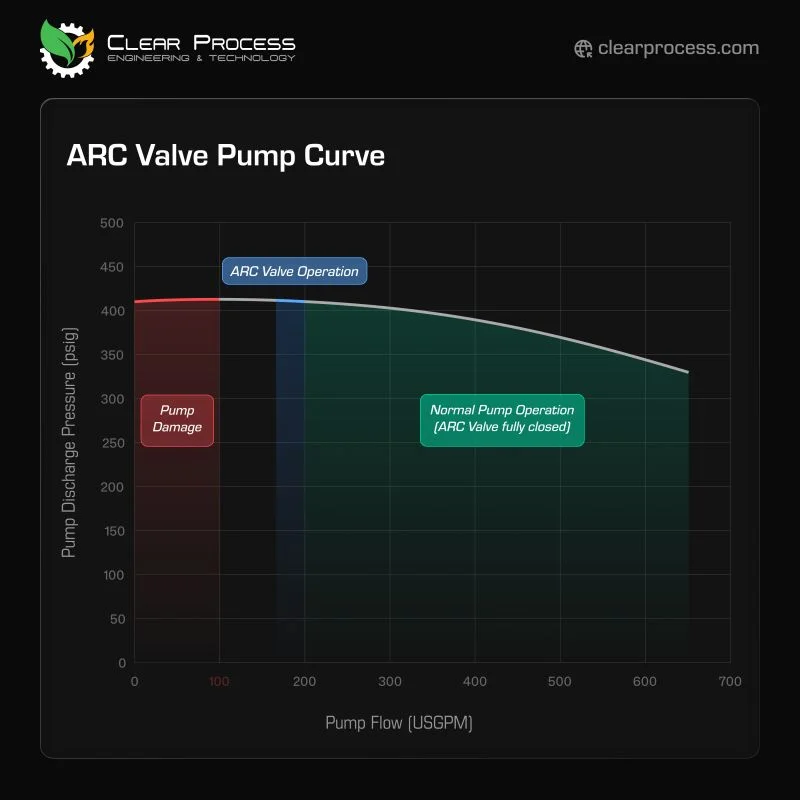
An automatic recirculation control (ARC) valve combines a main-line check valve, a flow-sensing mechanism and a bypass in one body. As process demand falls, the bypass opens to return liquid to the source vessel, helping maintain the pump's required minimum flow. As demand increases, the bypass reduces or closes.
The illustrative curve shows a 400 GPM operating point, a 100 GPM minimum continuous flow and a bypass switching point at 180 GPM. These are example conditions; the valve must be selected for the actual pump and return circuit.
A malfunctioning ARC valve can also waste energy. Internal leakage or incorrect selection can leave unnecessary recirculation flowing during normal production, so the pump moves more liquid than the process needs.
CPE's field technical services evaluate pump protection and operating behavior together, helping identify both low-flow risks and unnecessary recirculation.