A pump failure can begin in the equipment connected to it. At a U.S. research institute, CPE traced repeated pump trips and an eventual failure to heat from an upstream reactor.
How reactor heat reached the pump
Heat from the reactor's external heating system reached the pump through the connected piping. During periods of low or no flow, the process liquid did not carry that heat away as it would during normal operation. The resulting thermal expansion caused the rotor to contact the stator, explaining the earlier trips.
CPE's replacement-pump assessment
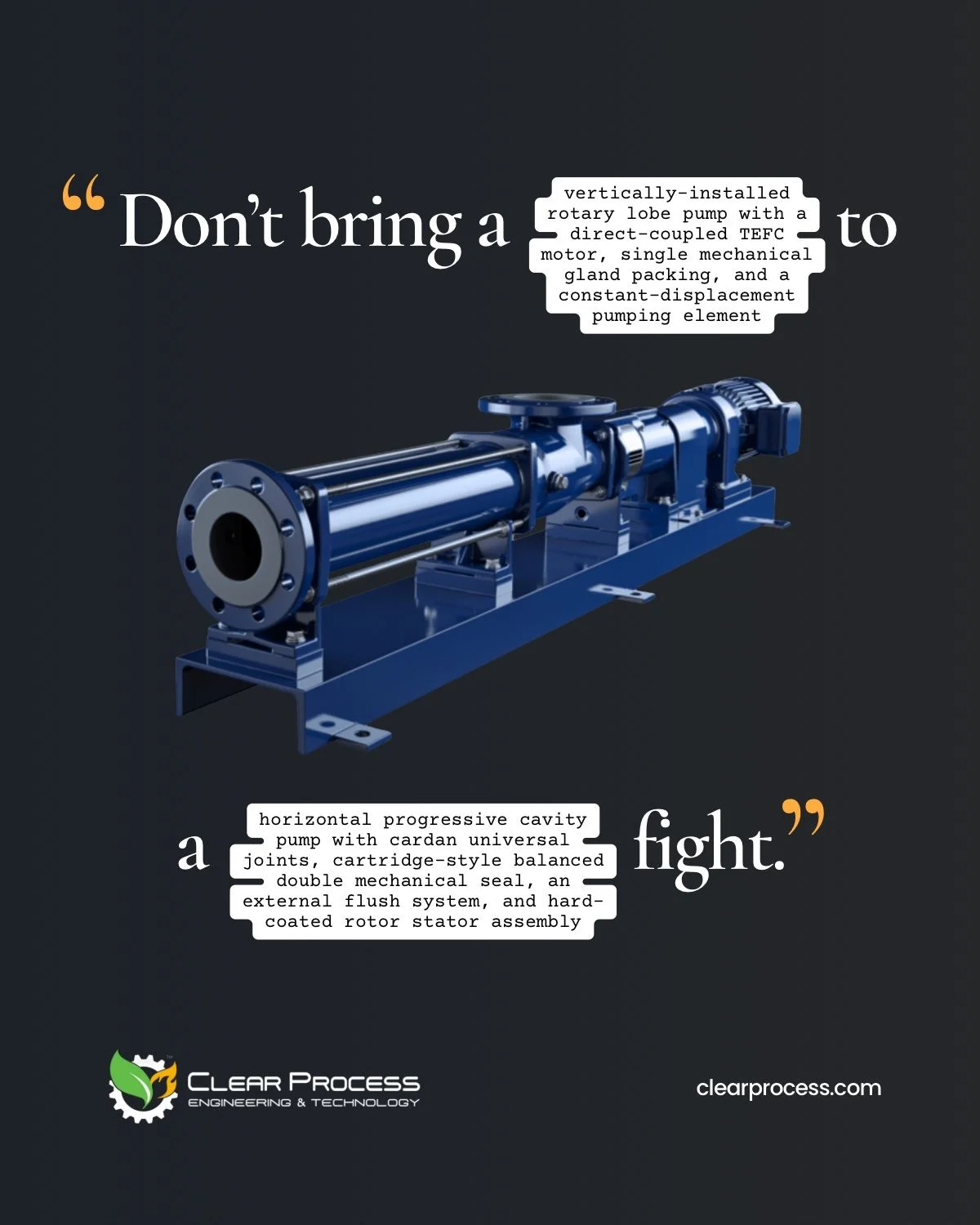
CPE developed a replacement-pump specification for the abrasive, high-temperature slurry and variable operating conditions. We compared alternative pump technologies and outlined modifications to manage heat transfer at the pump/reactor interface.
The investigation changed the replacement decision: the new pump and its connection to the process had to be evaluated together. Replacing a component without resolving the thermal exposure could repeat the same failure.
Pump failure analysis checklist
- Reconstruct the operating sequence. Compare trips and failures with startup, shutdown, low-flow periods and nearby heating cycles.
- Trace external heat sources. Review connected vessels, heated piping and other equipment that can change the pump's thermal exposure.
- Check the full operating range. Compare actual temperatures, pressures, flow rates and slurry properties with the pump's specified duty.
- Review the pump and process connection together. Assess thermal expansion, materials, seals and operating clearances with the equipment supplier.
- Define the corrective scope. Determine whether the replacement specification also needs changes to piping, heat management or operating procedures.
CPE's field technical services investigate these equipment interactions to establish the operating conditions a repair or replacement needs to accommodate.