Selective catalytic reduction (SCR) is an emissions-control technology that converts nitrogen oxides (NOx) into nitrogen and water. Ammonia is mixed with the flue gas, which then passes through a catalyst. Some systems generate the ammonia from urea.
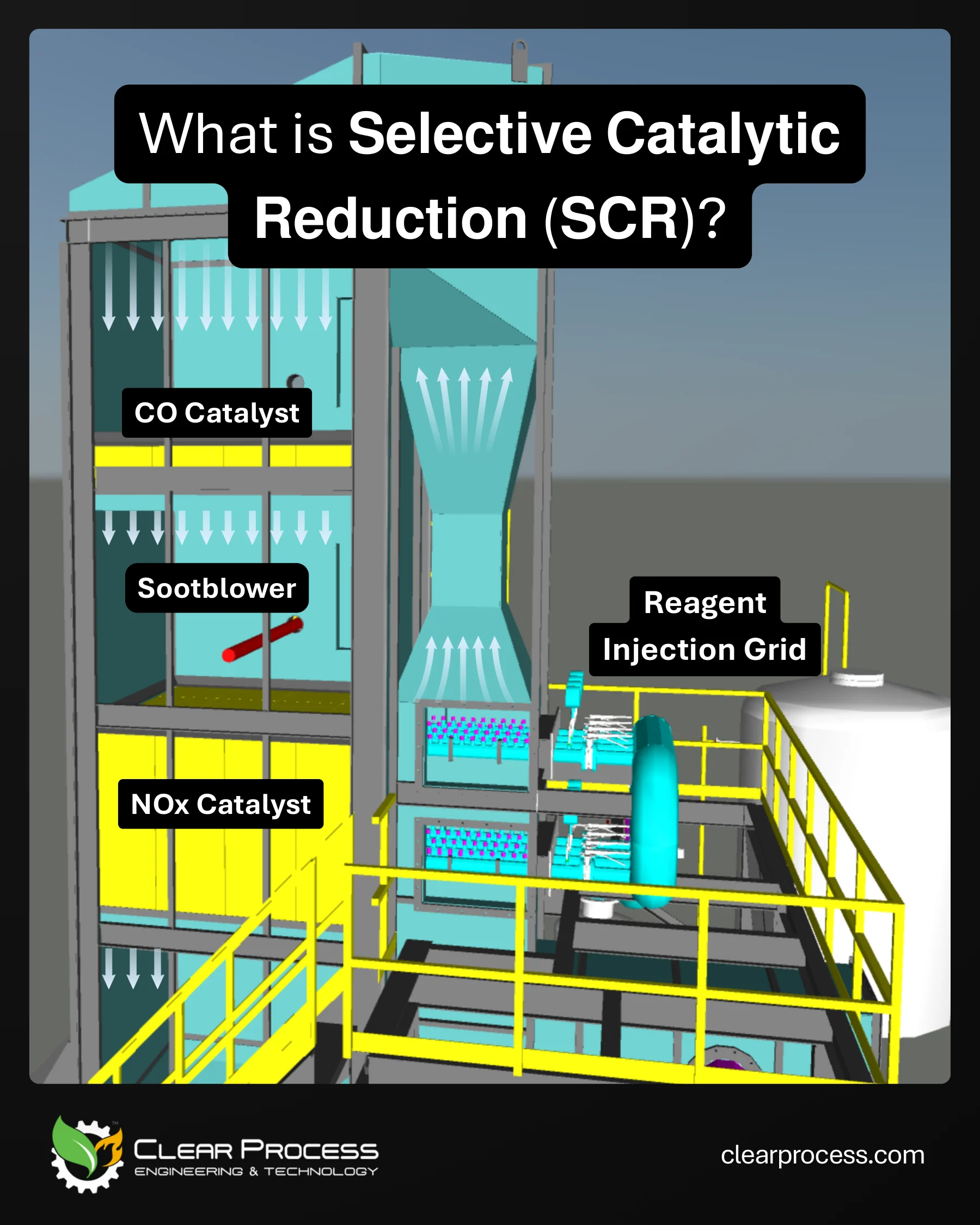
SCR is commonly considered when combustion controls or selective non-catalytic reduction cannot meet the required NOx limit. Its performance depends on more than the catalyst alone:
Temperature and load
The catalyst must stay within its specified operating window across load and fuel changes. Some arrangements require reheating.
Mixing
Uniform reagent and gas distribution helps avoid areas with inadequate NOx removal or excess ammonia passing through the reactor.
Catalyst management
Ash, contaminants and aging affect activity, pressure drop and replacement needs. Solid-fuel applications require particular attention to fuel and ash characteristics.
Plant integration
Reactor location affects gas conditions, fan duty, downstream fouling and maintenance access. Reagent handling, monitoring and catalyst replacement also need to be planned.
CPE's emissions-control engineering evaluates those requirements together, connecting the removal target to a system the plant can operate and maintain.