The important sootblowing decision is where to clean, with what equipment and under which operating conditions. Poor selection can cost steam, damage pressure parts and leave deposits in place.
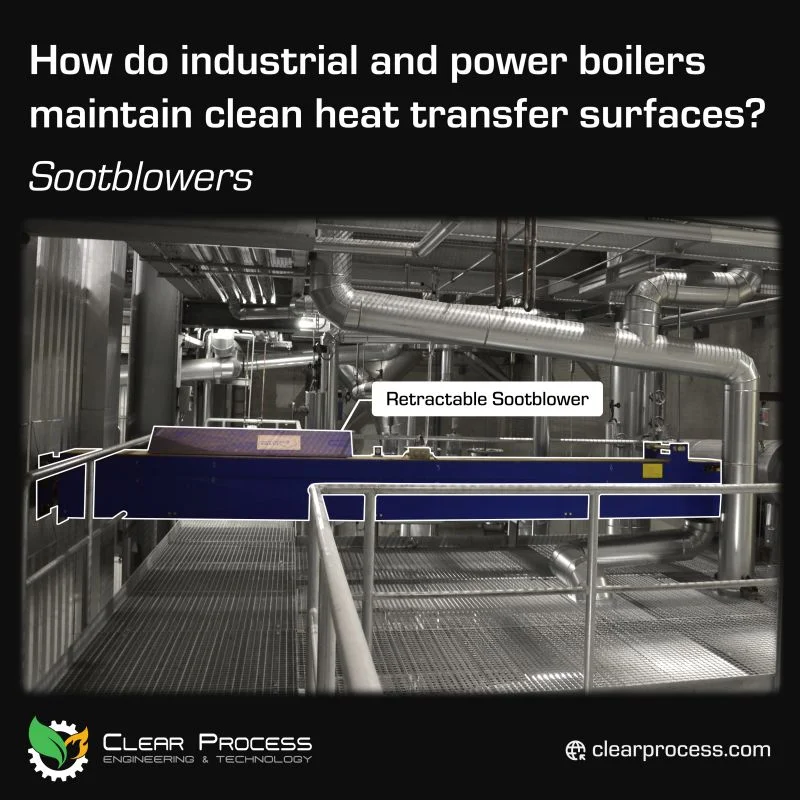
Sootblowers use steam or compressed air to remove deposits from boiler heat-transfer surfaces. Two common arrangements are:
Rotary sootblowers use a fixed lance with nozzles along its length. The lance rotates to sweep nearby surfaces and remains in the gas path. These are commonly used in cooler convection sections, such as back passes and air heaters.
Retractable sootblowers insert a lance during cleaning and withdraw it afterward. They suit locations where prolonged exposure would damage the assembly, as well as applications requiring their reach and cleaning pattern. Their travel and support structure require space outside the boiler.
The right choice depends on deposit behavior, surface temperature, coverage and access. Steam condition, drainage and sequencing also matter: more frequent blowing does not automatically mean better cleaning.
CPE's field technical services assess cleaning performance alongside combustion and boiler condition to identify the work that will preserve heat transfer and reliability.