Repeated steam-trap problems may start upstream of the trap. During an energy audit at an edible-oils facility, CPE found poor process heat transfer, widespread flooding and concerns about water hammer.
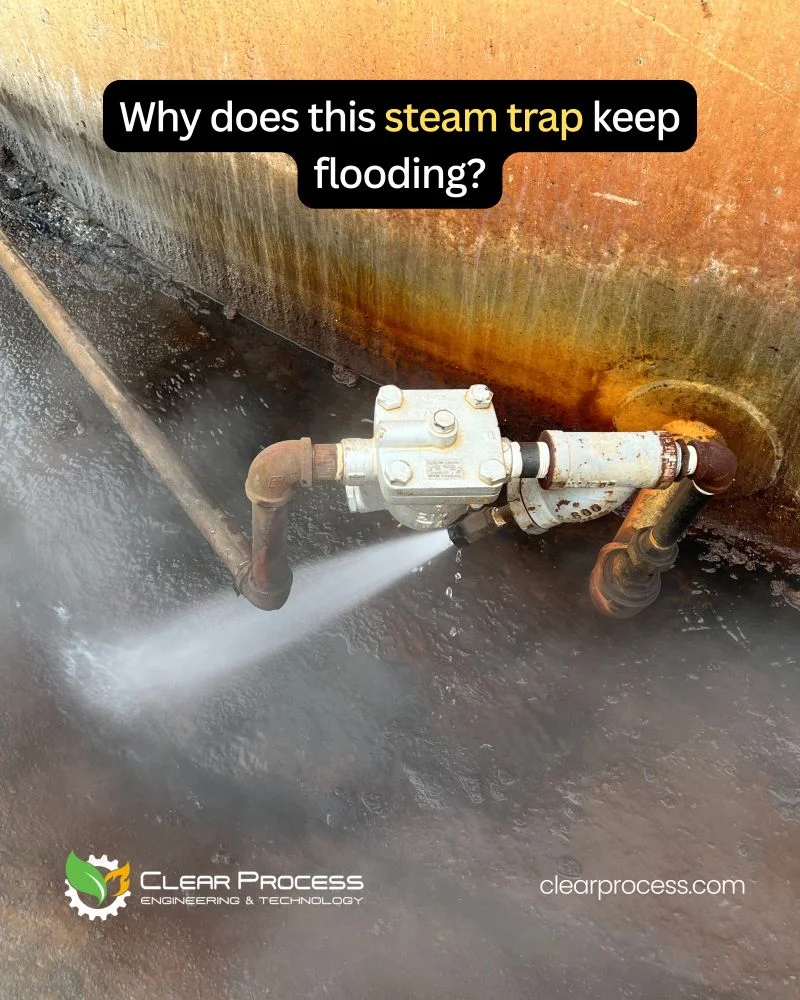
Why bottom takeoffs can carry condensate
Steam takeoffs are the branch connections that supply steam from a main header to process equipment or steam tracing. At this facility, numerous branches connected to the bottom of the headers. Condensate, the water formed when steam condenses, collects along the bottom of a steam main. These connections carried unwanted water toward the equipment and tracing.
What CPE recommended
CPE recommended reconfiguring the takeoffs to draw steam from the top of the headers, alongside the other drainage corrections identified in the audit. The intended benefits were better steam delivery, lower unwanted condensate loading and more reliable heating.
What else to check when steam traps flood
Top takeoffs do not resolve every flooding problem. Check the rest of the system, including:
- Steam-trap capacity.
- Available differential pressure across the trap.
- Backpressure in the condensate-return system.
The wider audit's savings potential cannot all be attributed to this piping change.
CPE's energy audits follow steam supply, process use and condensate return together to identify the cause of recurring losses and reliability problems.