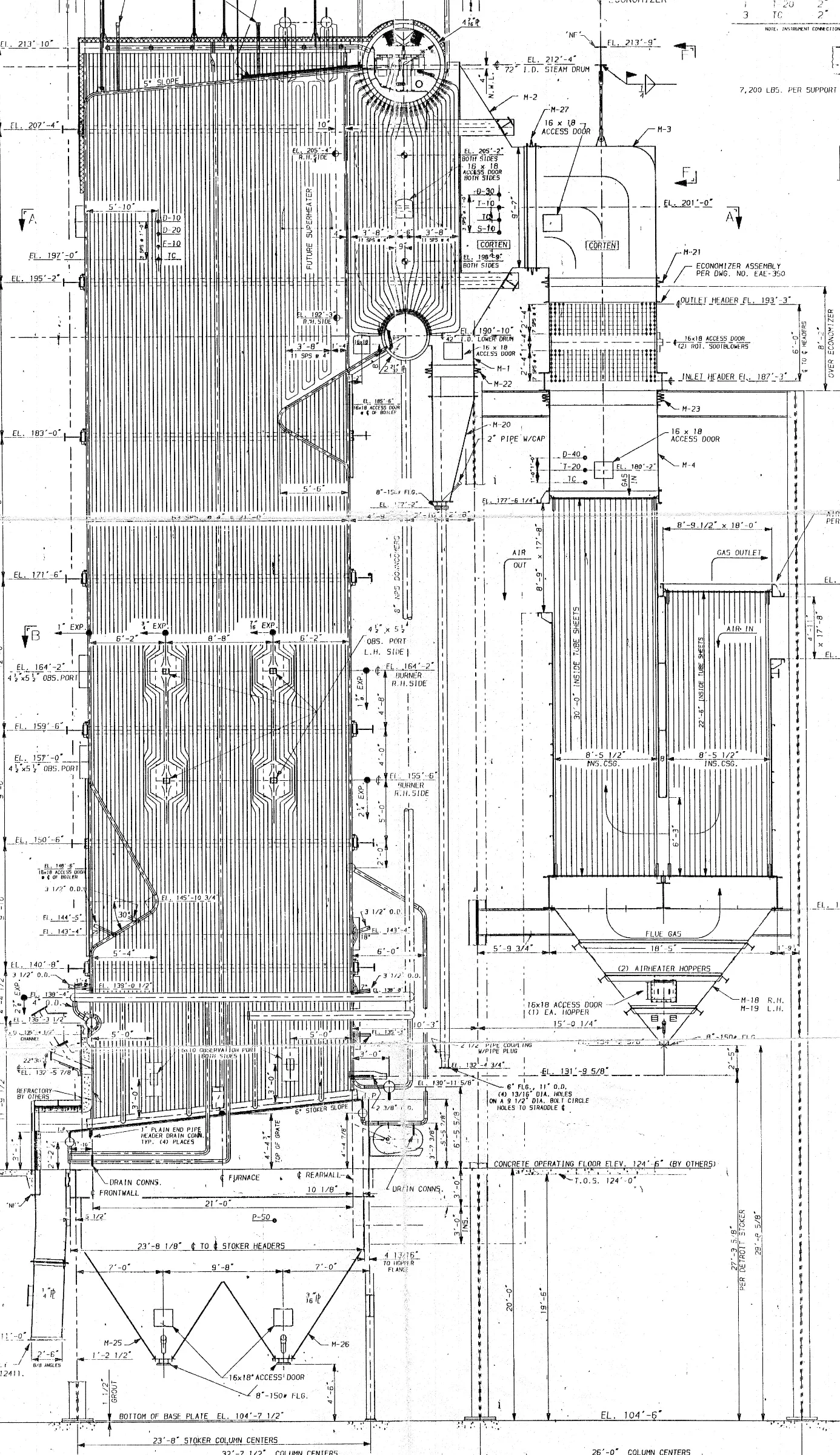
Biomass Boiler Capacity Study: Operating Limits and Upgrade Priorities
CPE evaluated the capacity of an existing biomass boiler, helping the owner set realistic production expectations and identify the checks needed before selecting equipment upgrades.
Project Details
Client
Pulp and paper manufacturer
Project type
Boiler capacity and debottlenecking study
Fuel
Biomass, with modeled moisture levels in the low-to-mid 40% range
Services Provided
- Developed a boiler performance model using plant drawings and equipment information.
- Calibrated the model against operating data from a stable period of biomass-only firing.
- Evaluated forced draft, overfire air, induced draft fan, and feedwater pump capacity.
- Assessed pressure-drop constraints in the mechanical dust collector and wet scrubber.
- Compared grate heat release and flue gas velocities to identify equipment limits and erosion risks.
- Outlined equipment modification options, preliminary capital estimates, and follow-up inspections and testing.
The Challenge
A pulp and paper mill wanted to increase steam production from its existing biomass boiler. The owner needed to understand how much additional output the system could support, how fuel moisture affected capacity, and which equipment changes would be necessary.
Fan capacity, resistance through the dust collector and scrubber, and tube erosion risk all influenced the achievable steam rate. Before committing to upgrades, the owner needed a clear distinction between continuous operation and a short-duration peak.
From operating data to capacity options
CPE developed a boiler performance model using plant drawings and equipment information, then calibrated it against a stable operating period producing approximately 140,000 lb/hr of steam from biomass. This was an observed operating point used for calibration, not the boiler's established maximum capacity.
The model evaluated higher steam-production scenarios across different fuel moisture conditions. CPE checked those scenarios against grate heat release, flue gas velocities, fan performance, and feedwater pump capacity to identify where equipment constraints emerged as output increased.
The assessment also examined how dust collector condition and wet scrubber pressure drop affected the induced draft fan's ability to support higher loads.
A clearer basis for production and upgrade planning
The study established modeled operating scenarios within recommended design limits and identified the additional risks associated with higher output. This gave the owner a technical basis for evaluating production targets and planning the next stage of equipment assessment.
A higher continuous-load scenario of approximately 240,000 lb/hr carried increased economizer tube erosion risk and could require equipment modifications. That finding clarified the tradeoff between pursuing more steam and managing wear on the existing boiler.
CPE recommended inspecting the mechanical dust collector and testing wet scrubber emissions at lower pressure drops before selecting fan modifications. These checks would help determine whether the existing induced draft fan could support the proposed conditions or needed an upgrade.
The owner gained a practical sequence for moving forward: establish realistic production expectations, verify the equipment constraints, and use those findings to prioritize capital spending.
215,000–220,000 lb/hr
Continuous operation
Modeled scenarios within recommended design limits, subject to fuel conditions and equipment requirements.
255,000 lb/hr
Peak target
Evaluated as a brief peak. Achievability remained uncertain, and this rate was not established as continuous capacity.
How much more steam can your boiler provide?
Evaluate the operating limits and equipment constraints before choosing a capacity upgrade.