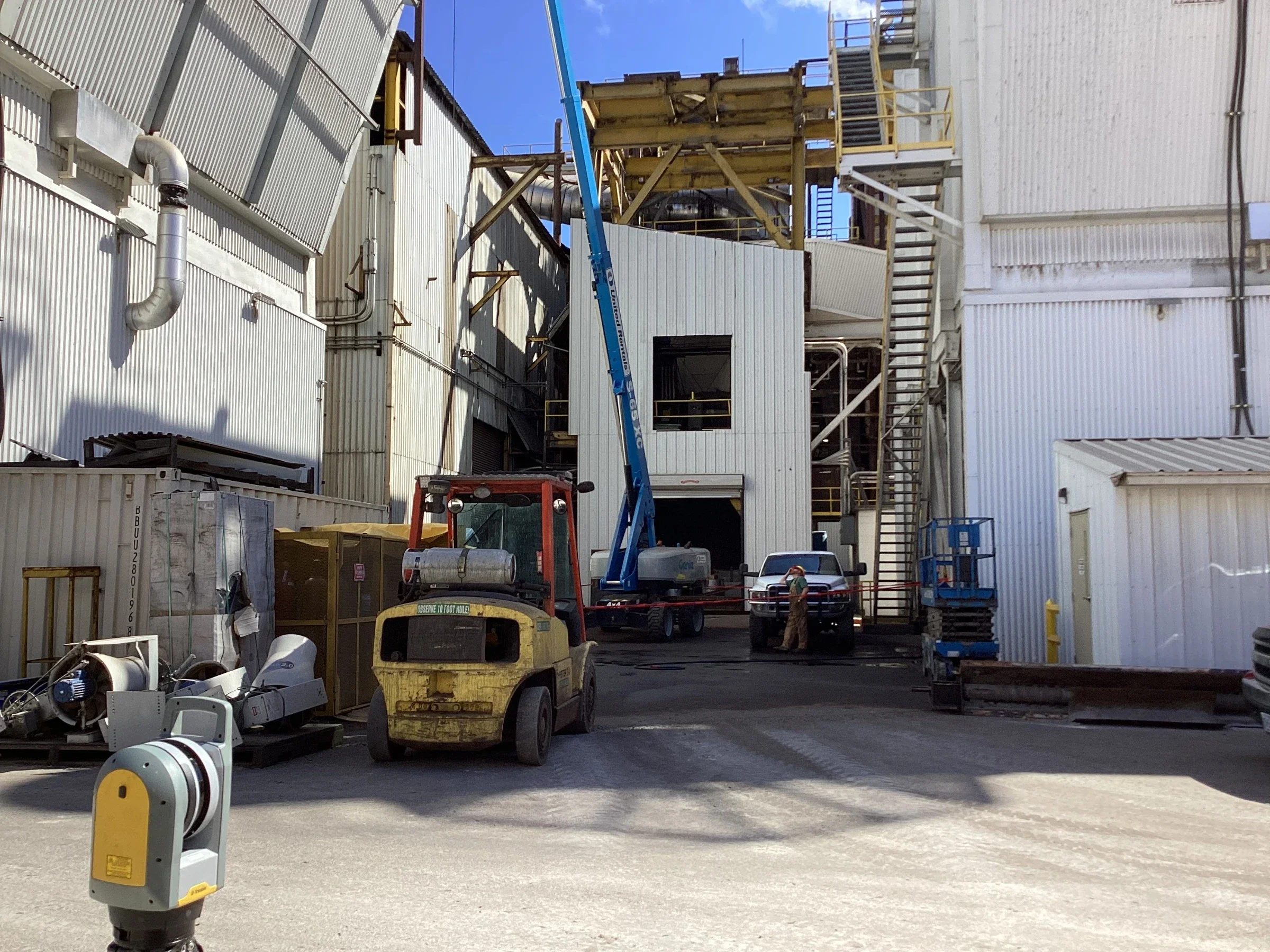
SNCR Engineering for Three Biomass Boilers
SNCR engineering and field tuning for three biomass boilers, including equipment supply, NOx control, and reduced dilution-water demand.
Project Details
Client
Wood products manufacturer
Project Type
Engineering, equipment supply, and field support
Equipment
Three biomass-fired boilers
System
Shared urea supply with individual boiler SNCR systems
Engineering scope
FEED through equipment supply and field tuning
Services Provided
- Prepared a front-end engineering design (FEED) package to define equipment interfaces, piping quantities, and utility requirements for estimating and procurement.
- Developed equipment layouts, piping and instrumentation diagrams, injection locations, and utility requirements.
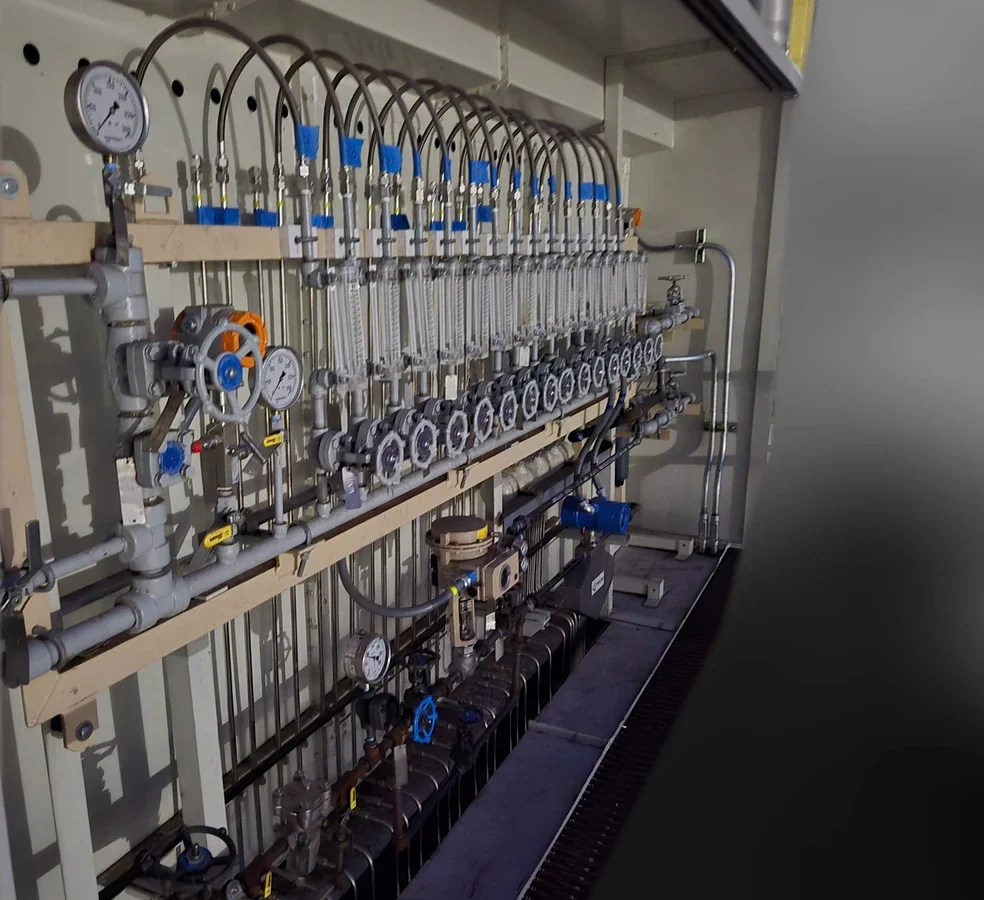
- Supplied the common urea pump and heater skid, boiler distribution equipment, injection lances, and control panels.
- Prepared installation bid documents, control descriptions, and operating and maintenance instructions.
- Provided field tuning of urea dosing, dilution-water control, and lance arrangements, with operator training.
The Challenge
A wood products manufacturer planned to add sander dust to the fuel mix for three existing biomass boilers as part of a facility expansion. The owner needed selective non-catalytic reduction (SNCR) to control nitrogen oxide (NOx) emissions, together with an installation plan that fit each boiler's outage.
The owner wanted to source selected components and installation work directly. CPE therefore needed to define the equipment boundaries, piping quantities, utility connections, and work that could be completed before each boiler shutdown.
Connecting system design with boiler operation
The system circulates urea from shared storage to a separate distribution rack at each boiler. There, controlled urea flow combines with dilution water and compressed air before injection lances spray it into the furnace.
At the appropriate furnace temperature, the reagent reacts with NOx to form nitrogen and water. CPE carried the work from front-end planning into equipment supply and field tuning, where dosing response and injection locations could be adjusted to actual boiler conditions.
Define the installation scope
Supply the coordinated system
Tune to actual boiler conditions
Improved NOx control with lower water demand
CPE carried the SNCR system from design through field tuning, matching urea dosing, dilution-water flow, and lance positions to each boiler’s operating conditions. This supported NOx control while limiting water addition in boilers sensitive to excess moisture.
CPE conducted three operator training sessions covering how NOx forms, how SNCR reduces emissions, and how to operate and control the system. Each session combined technical instruction with a guided field walk, helping operators connect what they learned to the installed equipment.
The engineering and installation packages defined equipment interfaces, piping quantities, and work to complete ahead of each boiler outage. This gave the owner a basis for direct purchasing and contractor bids across the three-boiler installation.
Dosing follows load
NOx control
Field tuning linked urea flow to firing-rate demand and adjusted injection-lance positions.
Reduced
Dilution-water demand
Water-control adjustments addressed the boilers' sensitivity to excess moisture while the team tuned NOx control.
Defined interfaces
Installation planning
Equipment boundaries and staged outage tie-ins supported owner purchasing and contractor bids.
Planning or tuning SNCR for a biomass boiler?
Talk with CPE about equipment integration, urea and water control, and field support for your boiler's operating conditions.