Engineered Lower Sidewall Header Repair Avoids a $3–4 Million Replacement
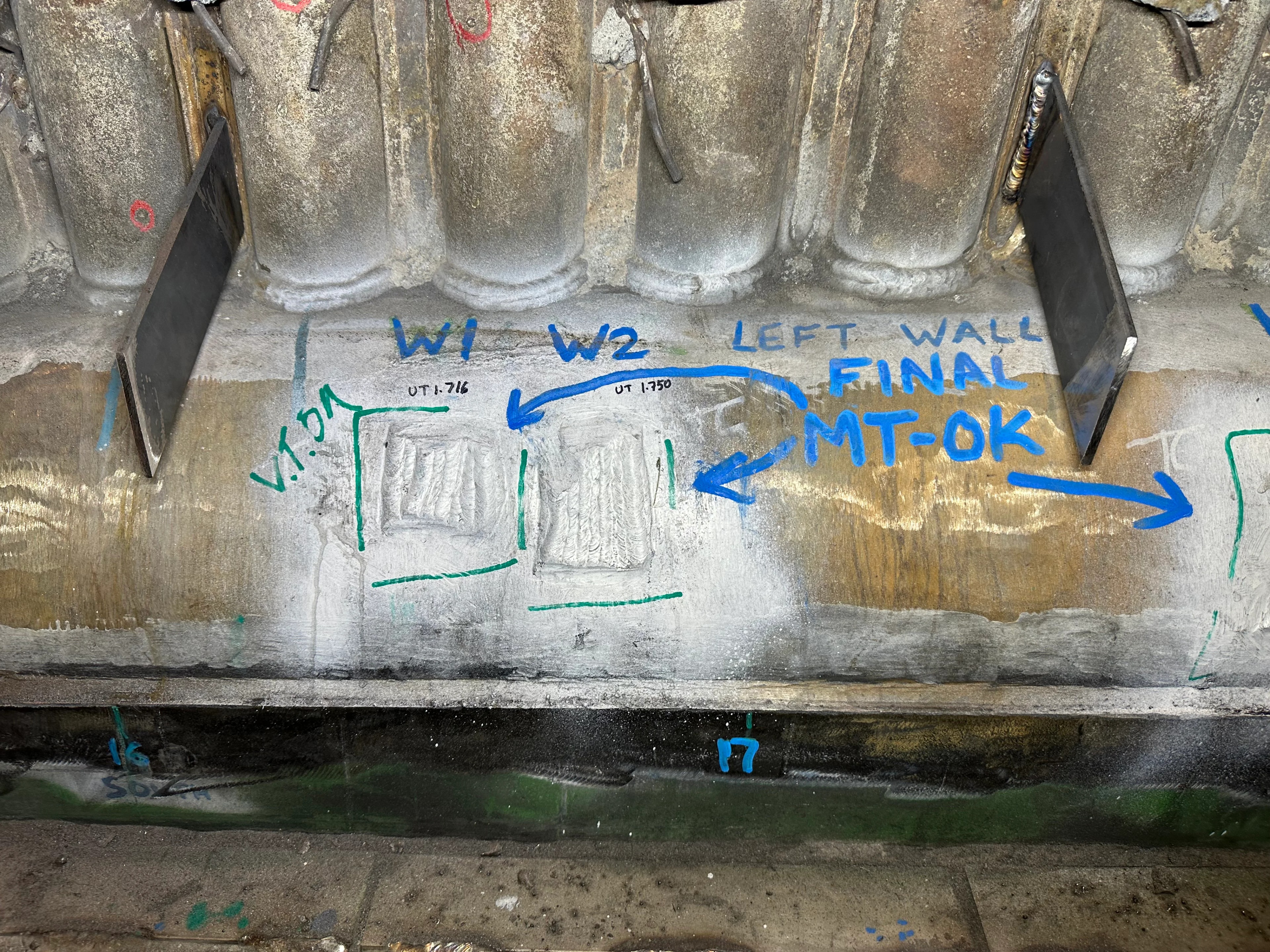
CPE developed and coordinated an excavate-and-repair procedure supported by detailed lower sidewall header stress calculations performed in strict accordance with ASME BPVC Section I. The repair avoided a full replacement estimated at $3–4 million and an estimated 8 to 10 weeks of forced outage.
Project Details
Client
Confidential Independent Power Plant
Year
2023
Project Type
Lower Sidewall Headers Repair
Services Provided
- Damage mapping based on hardness testing, MT, PT, and UT
- Detailed header stress calculations per ASME BPVC Section I, with as-built external load considerations
- Excavation and repair procedure development and on-site coordination
- NDE review and final engineering approval during repair execution
The Challenge
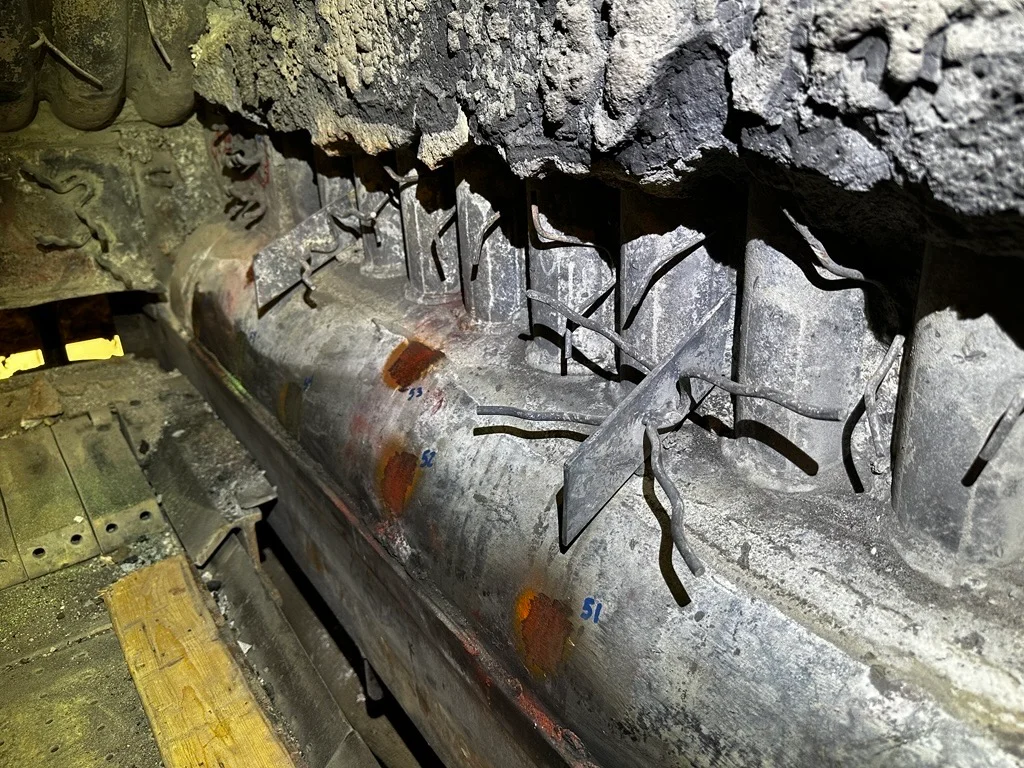
During a planned shutdown in 2023, a routine inspection identified heat-stress cracking on the fire-facing surfaces of the furnace lower sidewall headers. Additional examination and exploration determined that some cracks were superficial, while others required immediate attention. Because of the depth of some cracks, the unit would have to remain down until the repair was completed.
The initial plan was to source the lower header material, fabricate new headers, and install them. Though the header was a custom schedule (wall thickness), the header material was located in distributor inventory, but the fabrication cost and schedule remained high.
Expedited fabrication of new headers would have cost more than $1.5 million and taken 3 to 4 weeks to arrive to site. Full replacement would also have required removing structural steel, connecting piping, ductwork, and refractory. The total replacement cost was estimated at $3 to $4 million, not including lost revenue while the unit was down.
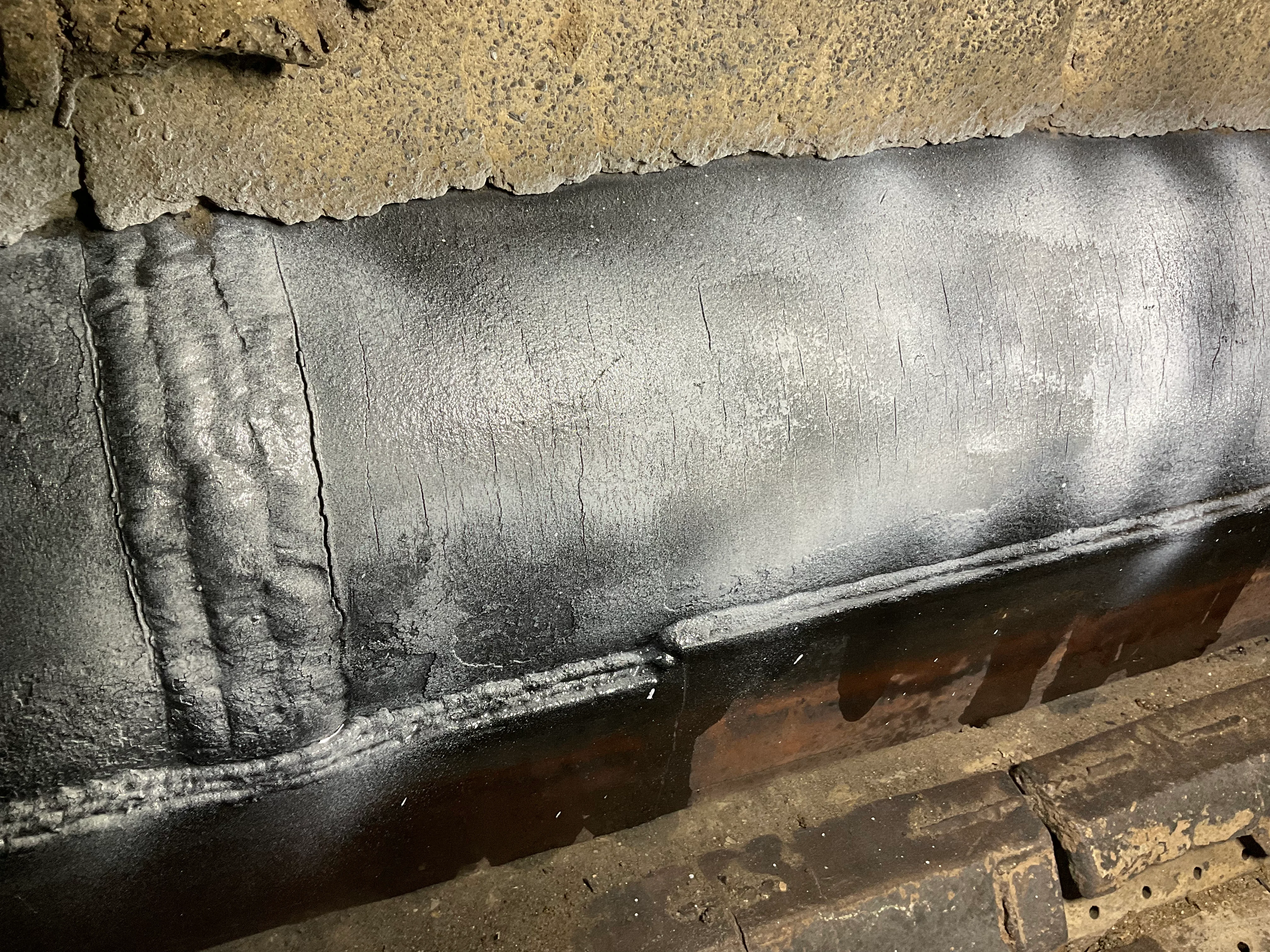
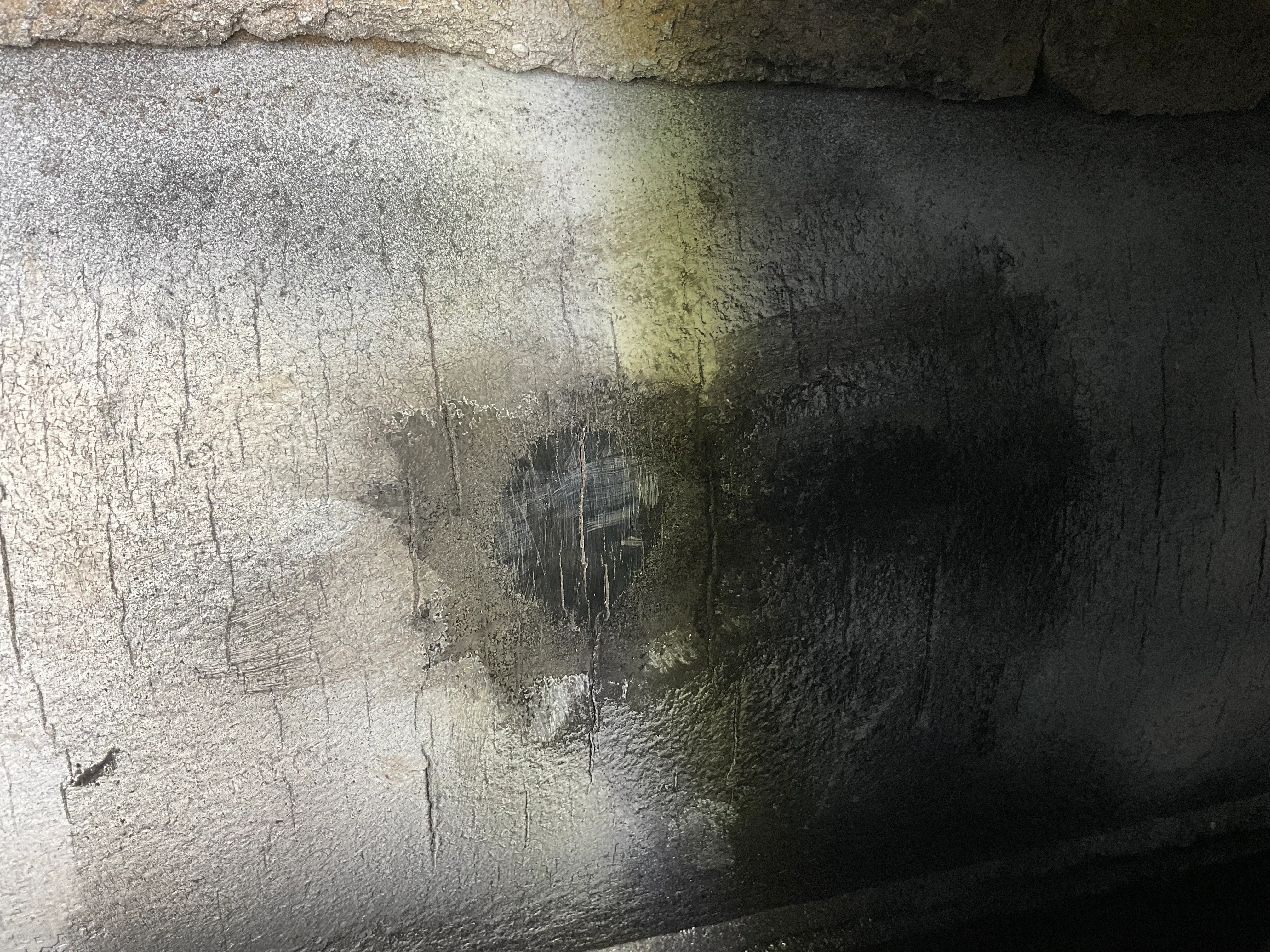
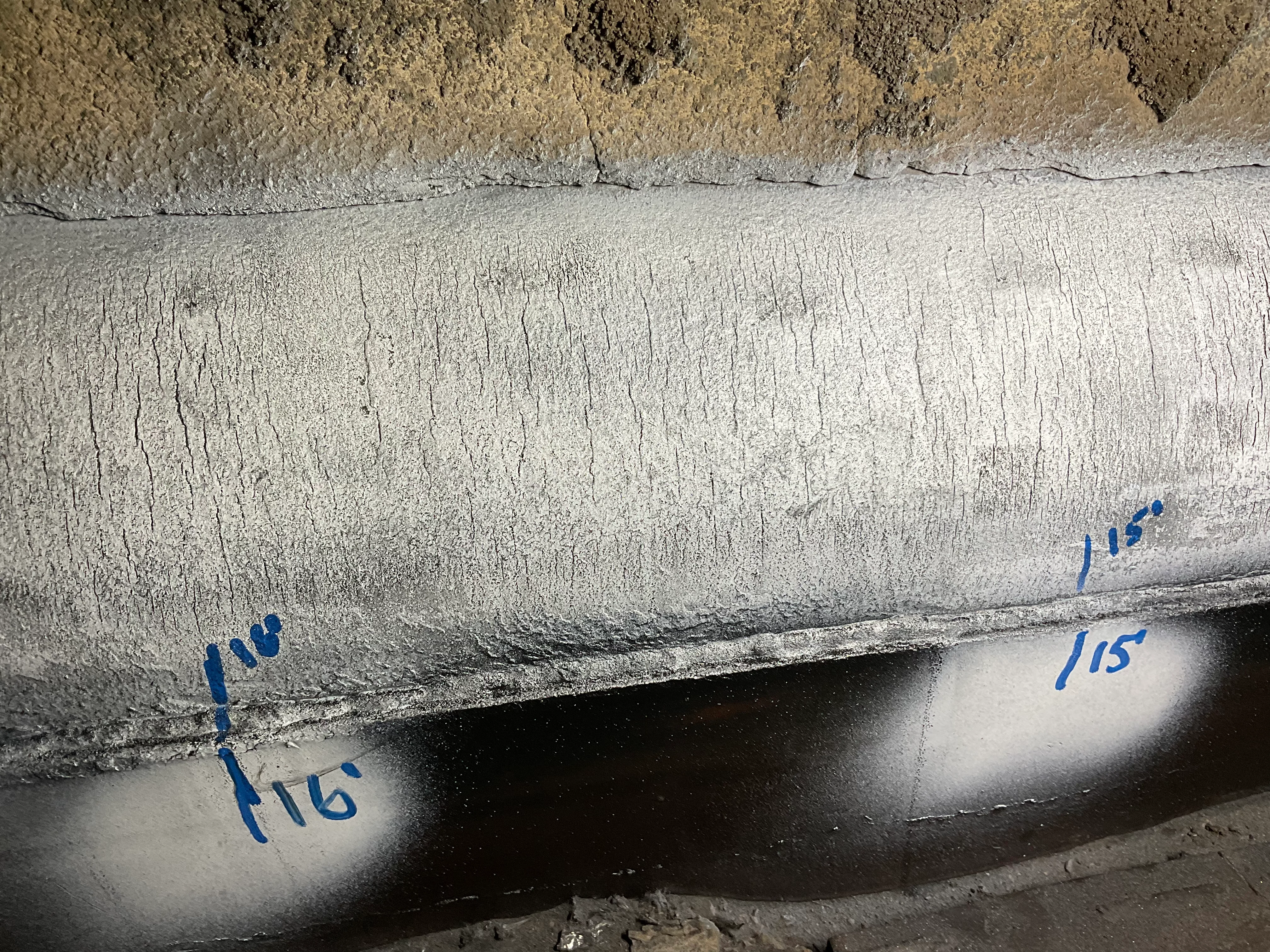
Additional views of the damaged condition.
Damage Mapping, Stress Analysis, and Coordinated Repair
CPE worked with the plant management team, its subcontracted boilermakers, and the non-destructive examination (NDE) team to perform detailed mapping of the heat damage and establish a safe and reliable alternative to full header replacement. The work combined multiple NDE methods with detailed header stress calculations and a coordinated field repair procedure.
Damage Mapping and NDE Coordination
Proposed and Developed Engineered Repair Procedure
Header Stress Engineering
Reinforcement and Load Analysis
Final Acceptance
Returned to Service Without Full Header Replacement
The subcontracted boilermakers staffed up to excavate and repair the lower sidewall headers around the clock, with NDE performed directly behind the repair work and final engineering review and approval.
The unit returned to service several days after the originally scheduled startup. Although the repair procedure increased shutdown expenditure and delayed startup by several days, it avoided an estimated 8 to 10 weeks of forced outage and millions of dollars.
8 to 10 weeks
Estimated forced outage avoided
Compared with the full header replacement path.
$3–4 million
Estimated full replacement cost
Excluded lost revenue while the unit was down.
3 years
Annual inspections completed
Condition remains consistent with the post-repair state.
Follow-Up Inspection History
The lower headers have been inspected annually for the past three years. The repaired header remains in the condition documented when the unit returned to service following the repairs.
Have an engineering question?
Tell us about your project and we will let you know how CPE can help.